


Introduction
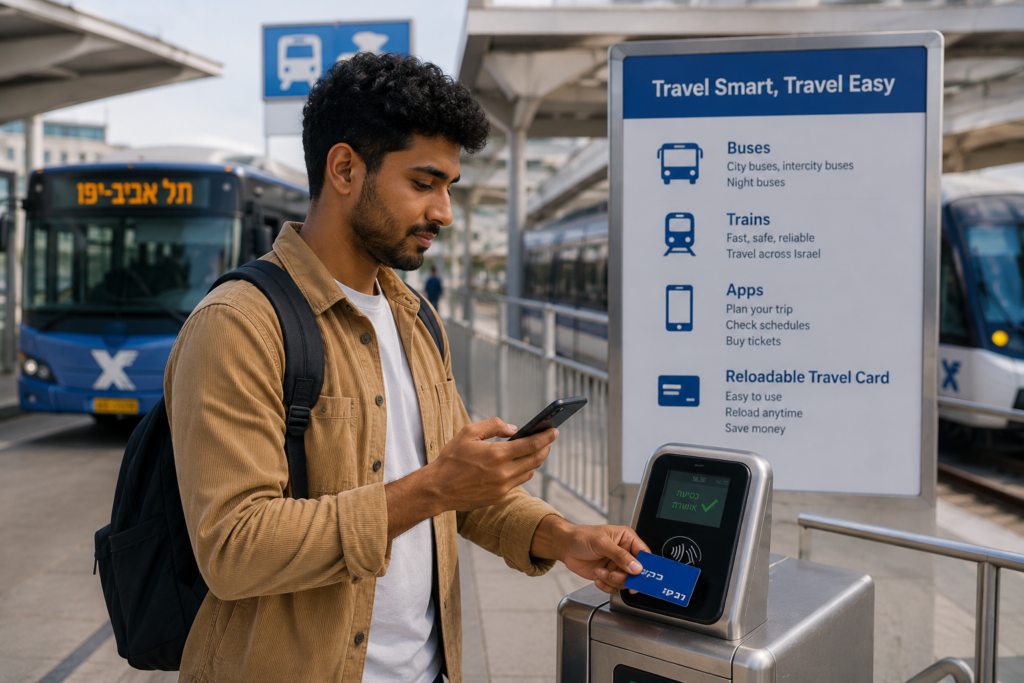
A lot of daily transport stress begins before the bus even arrives. Someone reaches the stop and realizes they do not know whether to tap a Rav-Kav, open an app, load value first, or do something different on the train.
This guide covers the practical side of ordinary travel: buses, trains, Rav-Kav cards, payment apps, and the small habits that stop simple trips from becoming frustrating ones.
Buses, trains, and everyday choices
Buses connect neighborhoods, workplaces, clinics, and train stations and are usually the flexible option for local daily movement. Trains are faster for longer intercity journeys, but only when the station is close enough to where you start and where you need to end.
Most workers use buses for local travel and trains for the long middle section of a bigger trip.
Which app to use
For most people in Israel, the app for public transport is Moovit. Enter your destination, and it shows route options, live arrival times, and step-by-step directions including transfers. It works in English and is free.
Download it before you need it. Once you have used it a few times on familiar routes, navigating an unfamiliar city becomes much less stressful.
Rav-Kav card or app payment
A Rav-Kav card works on most buses and trains across Israel. App payment suits workers who already manage their journey on their phone and want trip history in one place.
The best choice is the one that still works when you are tired, late, or standing in weak mobile reception. Keep a main option and a backup.
Reloading your card — including online
Reload earlier than you think necessary — the night before a shift, on your day off, or when the balance starts looking low rather than empty. Discovering an empty card at the station gate is an avoidable problem.
You can reload a Rav-Kav card at post offices, at reloading machines in train stations, and online through the Rav-Kav Online portal (ravkavonline.co.il). The online option lets you load funds from home without going to a station.
When checking a route, verify the number, direction, stop name, and whether the time shown is for today. A correct line running in the wrong direction is still the wrong trip.
Small mistakes that repeat
- Tapping the wrong card or assuming the payment worked without checking
- Boarding the correct line in the wrong direction
- Using an old screenshot instead of live information
- Waiting until the final minutes to reload, then blaming the system for a problem that started earlier
- Planning the outgoing trip and forgetting to check the return
Conclusion
Daily travel gets easier once you stop treating every trip as a fresh puzzle. Pick a payment method that works in real conditions, reload before zero, use Moovit for live information, and always plan the return trip alongside the outgoing one.
Most transport problems trace back to one detail that was not checked in time.
Ask the Expert
“My Rav-Kav expired and I cannot reload it right away. Can I use a payment app temporarily, and how do I switch back later?”
Submit your question: LankaConnect.com/ask-the-expert