


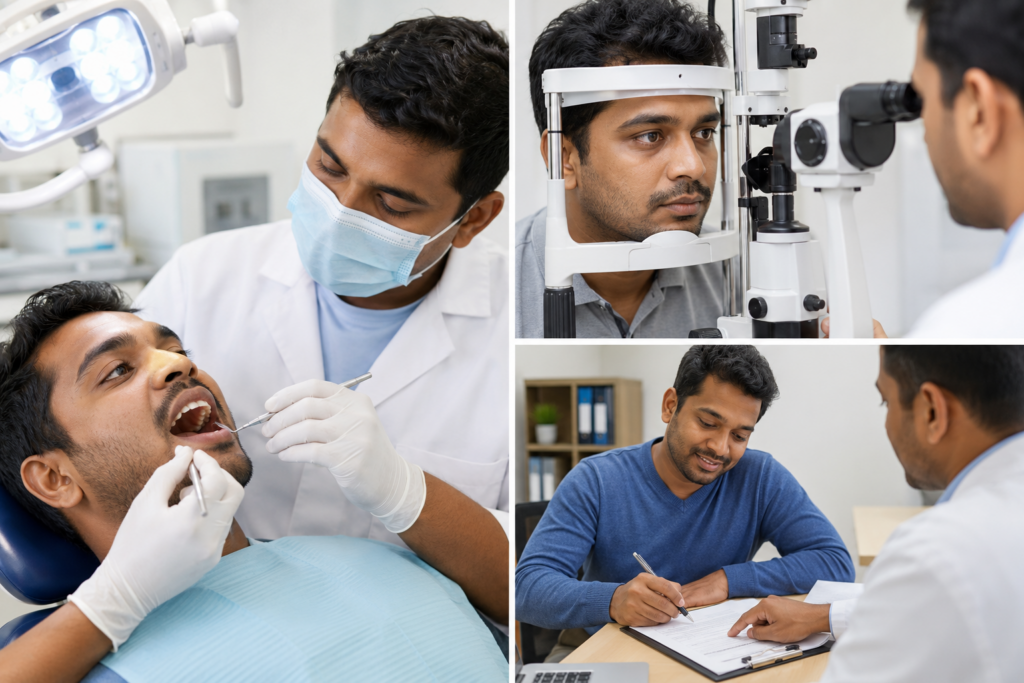
Introduction
Many foreign workers discover the limits of their medical insurance not when they are sick, but when they need a dentist, glasses, eye treatment, or other non-routine services.
This is where confusion begins.
This guide explains what is usually covered, what is often not covered, and how to avoid unexpected costs.
Why These Services Are Different
Most private medical insurance for foreign workers focuses on basic and necessary medical care.
This means:
- Not all services are covered
- Some treatments are only partially covered
- Some services are not covered at all
Workers should not assume that all medical needs are included.
Always Check Before You Go
Before booking any appointment, ask:
- Is this service covered?
- Is it partially covered?
- Do I need approval?
- Do I need a referral?
Checking in advance can save money and prevent problems.
Dental Care
Dental treatment is one of the most common areas of confusion.
What May Be Covered
- Emergency dental treatment
- Severe pain situations
What May Not Be Covered
- Routine cleaning
- Fillings
- Root canal treatment
- Crowns
- Long-term dental care
Do not assume full coverage.
Vision Care
Eye care is another area with different rules.
Urgent Eye Problems
- Pain
- Infection
- Injury
- Sudden vision changes
These may be treated as medical issues.
Non-Urgent Vision Needs
- Glasses
- Contact lenses
- Routine eye exams
These are often not fully covered.
Other Services That May Be Limited
Some services require extra attention:
- Physiotherapy
- Specialist visits
- Advanced tests
- Medical equipment
- Second opinions
Each of these may have different conditions or limits.
How to Protect Yourself Financially
Before starting treatment:
- Ask for cost estimates
- Understand the full treatment plan
- Check how many visits are required
- Confirm what is covered
Do not start long treatments without clear information.
Keep All Documents
Always keep:
- Receipts
- Treatment plans
- Prescriptions
- Referral documents
These may be needed for:
- Insurance
- Reimbursement
- Future treatment
Ask Questions Clearly
If something is unclear:
- Ask again
- Ask in writing if possible
Clear answers prevent misunderstandings.
Common Mistakes
- Assuming everything is covered
- Starting treatment without checking
- Not asking about total cost
- Ignoring insurance rules
- Losing receipts
Conclusion
Dental and vision care are common needs, but insurance coverage is not always simple.
Workers who:
- Ask early
- Understand their policy
- Keep documents
will avoid unnecessary problems.
Final Tip
Always compare:
- What the treatment requires
- What your insurance actually covers
Do not assume they are the same.