


Introduction
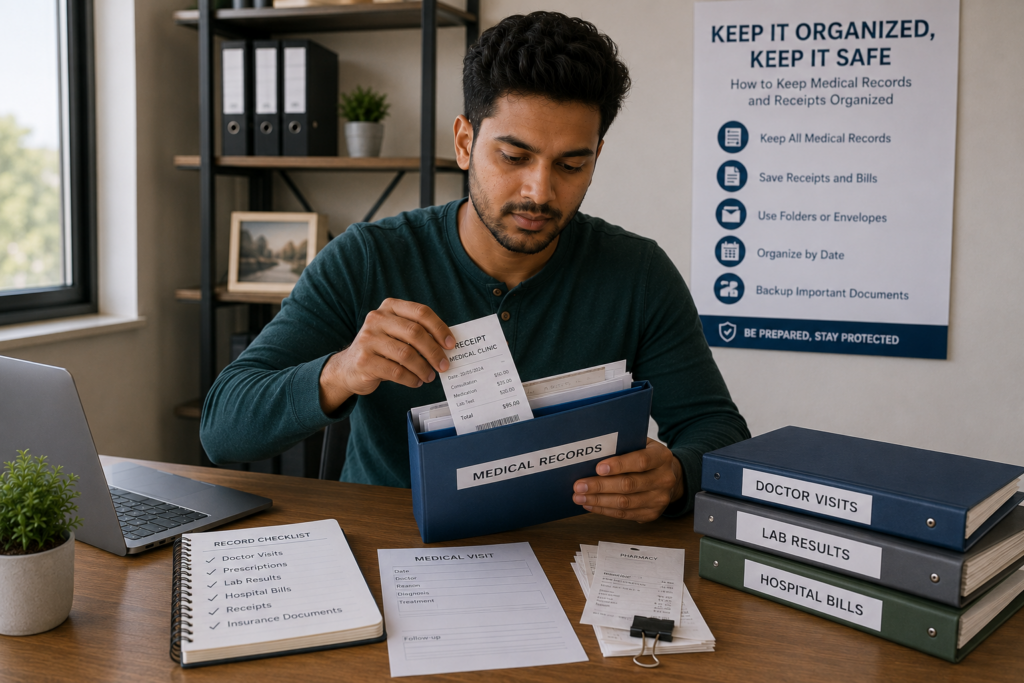
Keeping medical documents organized may seem unimportant until the moment you actually need them.
When a worker is asked to show:
- A prescription
- A receipt
- A hospital report
- Proof of illness
Organization becomes critical.
For foreign workers in Israel, medical documents are not only about health. They can affect insurance claims, work injury rights, sick pay, and future treatment.
Why Organization Matters
Medical care often involves multiple steps:
- Clinic visit
- Pharmacy
- Hospital
- Follow-up treatment
If documents are not organized:
- Doctors may repeat tests
- Insurance may delay payment
- Claims may become weaker
Clear records save time and reduce stress.
What Documents You Should Keep
Always keep copies of:
- Prescriptions
- Pharmacy receipts
- Clinic visit summaries
- Hospital discharge papers
- Test results (blood tests, imaging)
- Referral forms
- Insurance communication
- Medical notes (sick leave or restrictions)
If the issue is work-related, also keep:
- Accident details
- Employer communication
- Work injury forms (such as BL/250)
Build a Simple System
The best system is one you can use easily.
Physical Storage
Use one folder or envelope to keep all papers together.
Digital Storage
Create one folder on your phone, email, or cloud storage.
Suggested structure:
- Doctor visits
- Hospital documents
- Prescriptions
- Receipts
- Tests
- Work injury
Organize Documents on the Same Day
Do not wait.
On the same day you receive documents:
- Take clear photos
- Check names and dates
- Save them in your folder
- Back them up (email or cloud)
Use Clear File Names
Use a simple format:
Date + place + document type
Example:
- 2026-03-14 Clinic Visit
- 2026-03-14 Hospital Discharge
This makes documents easy to find later.
Why Receipts Are Important
Receipts are not just proof of payment.
They also show:
- Date of treatment
- Location
- Type of service
They are important for:
- Insurance reimbursement
- Work injury claims
- Tracking treatment
Do not throw them away.
How Long to Keep Documents
Do not delete documents too early.
Keep them:
- Until treatment is fully completed
- Until there are no open claims
- Longer for serious injuries or illnesses
Important records should be kept long-term.
Protect Your Privacy
Medical information is personal.
You should:
- Share documents only when necessary
- Avoid sending sensitive documents in large groups
- Keep your records secure
When Organization Helps You Most
Good organization helps when:
- You need follow-up treatment
- Insurance asks for proof
- There is a dispute
- You need to explain your case
Clear records make everything easier.
Common Mistakes
- Keeping documents in different places
- Not taking photos
- Losing receipts
- Not backing up files
- Waiting too long to organize
Conclusion
Medical organization is not about being perfect.
It is about making your life easier when you need help.
Workers who keep clear and organized records:
- Save time
- Reduce stress
- Protect their rights
Final Tip
The best habit is simple:
Organize documents on the same day you receive them.
This one habit can prevent many problems in the future.