


Introduction
Life gets messy when too many small details live only in your head. An address for tomorrow, a clinic phone number, a salary question to ask, a document deadline, a shopping list, and a message you promised to answer can start competing for the same tired memory.
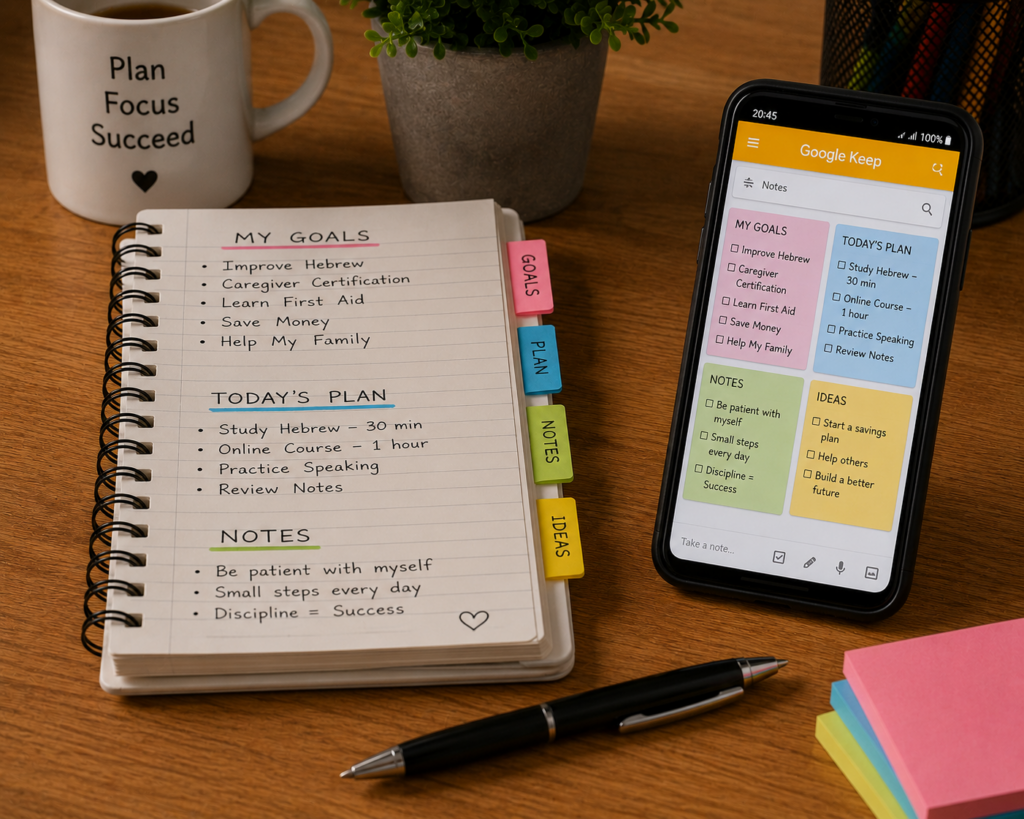
A personal knowledge system sounds complicated, but it can be very small. It usually means one place for notes, one place for dates, one place for documents, and a short habit of checking them before life becomes chaotic.
What belongs in the system
- Appointments, visa dates, renewal deadlines, and travel dates
- Important phone numbers, addresses, office details, and transport notes
- Work records, housing details, health notes, and payment questions to follow up on
- A short list of tasks that must be handled soon, before they turn into stress
- Ideas, plans, and questions that are not urgent today but should not disappear
Keep it simple enough to survive a busy week
A system fails when it asks too much from a tired person. Most workers do better with one small trusted setup than with many clever apps that are opened once and forgotten. A simple note called “Important Israel Info” can be far more useful than a perfect system that dies after three days.
The point is not to become a productivity expert. The point is to miss fewer deadlines, repeat fewer mistakes, and free some mental space for real life.
How to build the system in one evening
Most workers who have tried and failed to stay organized did so because they tried to build a perfect system. A more practical approach is to spend one hour doing three things: create a notes file on your phone called something simple like “Israel Info,” add five to ten pieces of information you already know by heart (employer name and number, clinic address, visa expiry date, landlord contact), and set one weekly reminder to review and update it.
That is the whole setup. Everything else can be added gradually. A system that exists and is used imperfectly is far better than a system planned but never started.
What to do when the system gets messy
Every system becomes messy eventually. Folders fill up, reminders are ignored, and old notes lose meaning. When this happens, the answer is not to build a new system. The answer is to spend thirty minutes cleaning the existing one: delete what is outdated, confirm what is still correct, and add anything important that arrived in the past few weeks.
Workers who treat this kind of reset as a normal monthly task rarely feel overwhelmed by their own records. Workers who wait until the system is completely broken usually find that the cleanup takes much longer than it should.
Conclusion
Your simple personal system turns scattered details into something you can actually use. It saves time, lowers stress, and makes everyday decisions easier because the important information is no longer floating around in your head.
When life gets busy, the best system is not the smartest-looking one. It is the one that still helps you find what you need next week without starting over.