


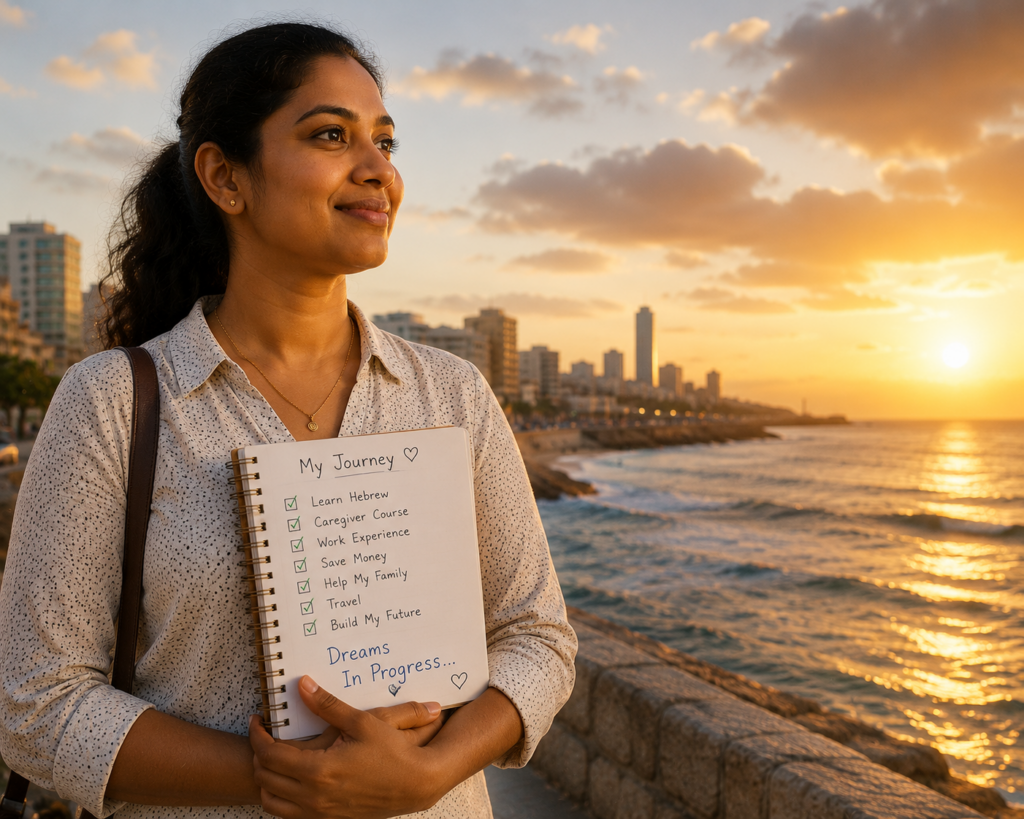
Introduction
Success abroad does not usually come from one big decision. It comes from many small habits that protect money, time, documents, learning, and relationships. Workers who seem “lucky” are often simply workers with better routines.
A personal success plan is not about perfection. It is about creating a daily life strong enough to support your bigger goals.
The five pillars of a strong plan
Digital control means using a small set of reliable tools well rather than many tools poorly. A phone with a working translation app, a saved map of key locations, a cloud folder for documents, and a calendar for deadlines covers most of what daily life in Israel actually requires. The aim is not to be technically advanced. The aim is to avoid losing time, money, or documents because of a tool that was never learned.
Document control means knowing where your key papers are before you need them urgently. Employment contract, payslips, visa pages, housing documents, medical records, and important screenshots should all be findable in under ten minutes. Workers who build this habit early almost always use it at a moment that matters: a dispute, a departure, an application, or a legal question.
Learning control means improving something steadily rather than waiting for the right moment. Language, digital confidence, and work knowledge all grow through small repeated effort. A worker who improves five percent every month over two years arrives home in a noticeably different position than a worker who planned to learn but never started.
Future control means treating current work as more than today’s income. Every month of reliable work builds skills, proof, and reputation that can be used later. The worker who names those skills clearly, saves evidence of them, and connects them to a future opportunity is turning everyday work into career capital that travels home.
Return control means preparing for the end of the Israel chapter before the final month forces decisions. Documents collected, savings moved carefully, references requested, and legal status confirmed in advance turn a stressful departure into an organized one. The difference between the two is usually a few months of earlier attention, not additional cost.
How to turn good intentions into a routine
A plan becomes real when it enters the week. One evening can be used for checking records. One short daily block can be used for language. One weekend review can be used for payments, appointments, and future notes. A worker does not need a complicated productivity system. A small routine done steadily is usually enough.
The best plans are boring in a good way. They are repeated, reliable, and strong under pressure.
What success should really mean
For many workers, success is not status or appearance. It is leaving Israel or continuing in Israel with more order, more options, and fewer preventable mistakes. It is having documents ready, skills stronger, savings more protected, and future steps clearer than they were before.
That kind of success is realistic. It can be built piece by piece.
Conclusion
Building a strong future requires more than hard work. It requires organized work. When digital habits, language growth, records, planning, and self-protection move together, a worker’s life becomes more stable and more open at the same time.
The most useful success plan is not the one that promises everything. It is the one that keeps helping on tired days, normal days, and stressful days alike.