


Keywords: digital evidence messages photos audio, preserve evidence Israel, screenshots abuse proof, LankaConnect guide
People often understand the value of digital evidence only after something has already gone wrong. By then the messages were deleted, the screenshot cut off the date, the audio file has a useless name, or the old phone is no longer available.
Strong evidence is not dramatic. Readable evidence is strong evidence. Someone else should be able to look at it later and understand who said what, when it happened, and why it matters — without asking a single question.
What strong evidence looks like
Strong evidence is clear, dated, organized, and backed up. A useful screenshot shows names, numbers, timestamps, and enough of the conversation to make sense of it. A useful photo shows both detail and context. A useful audio file is saved with a name that still means something three weeks later.
Keep the original wherever possible. Heavily edited, cropped, or forwarded material can become less useful because it raises questions about what was removed.
How to save messages
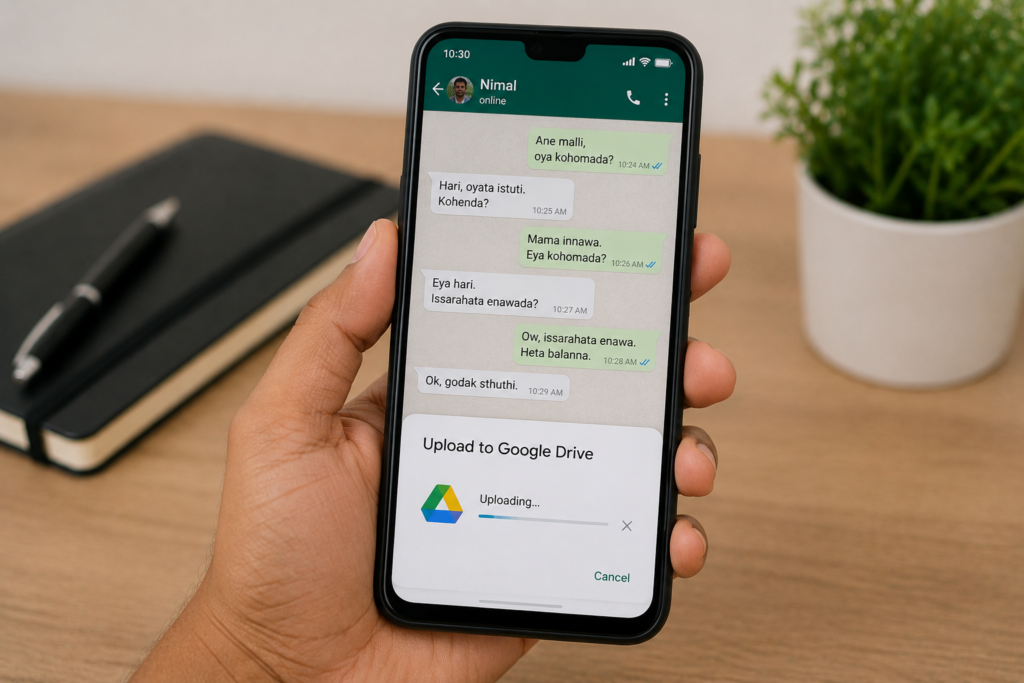
Save enough of the thread to show what came before, who was speaking, and when it was sent — not just the one dramatic sentence. Export chats if the app allows it, and also save key screenshots in case the app changes or access disappears.
Name folders clearly: “Employer late salary May,” “Threat messages roommate,” “Passport issue March.” Fifty random screenshots in a camera roll become nearly useless when the situation turns serious.
Photos, video, and audio
If you photograph an injury, a damaged room, a broken lock, or an unsafe workplace, take both close pictures and wider shots. The close picture shows detail. The wider picture shows location and context.
If you record audio or video, save a short note immediately afterwards: who was there, where it happened, and why you recorded it. That note will not prove everything, but it stops you from forgetting the context later.
Backup rules that actually protect evidence
Send copies to a secure email account (Gmail, Yahoo) or cloud storage (Google Drive, iCloud) — phones get lost, taken, broken, or reset.
In a crisis, evidence saved in only one place can disappear in seconds. Back up before you need to.
Keep sensitive files away from community groups. The more widely a file moves, the easier it is to lose control of it and weaken the chain of what happened.
Share only with people or bodies who genuinely need the material.
Conclusion
Another person should be able to open your evidence folder later and follow it without asking a single question. That is the standard. Clear names, intact timestamps, original files, simple structure.
Build the habit on a quiet day. Evidence saved badly on a bad day almost never survives long enough to be useful.