


Introduction
A used car can look like freedom. For buyers who focus only on the asking price, it can also become one of the fastest ways to lose money in Israel.
The real cost of a used car includes ownership papers, condition, insurance, future repairs, registration timing, and whether the car actually fits your income and daily use.
Where to look
Most used cars in Israel are listed on Yad2 (yad2.co.il), the main marketplace for private and dealer sales.
The site has filters for:
- Price
- Year
- Mileage
- Location
Some workers also consider leasing rather than buying. Leasing avoids upfront ownership costs but involves a fixed monthly payment and restrictions on mileage.
For most foreign workers, buying a used car is more practical than leasing, but it is worth knowing both options exist.
The asking price is only the first number
A lower price can hide:
- Old tires
- Battery issues
- Weak brakes
- Body damage
- Upcoming registration fees
- Repairs the seller expects you to pay
The better question is not which car costs less today, but which one will cost less over the next months.
Verify ownership before anything else
Before inspecting the car or discussing price, confirm that the person selling it is the legal owner.
You can check vehicle ownership through the Ministry of Transport vehicle registry using the license plate number.
This check can show:
- Ownership details
- Unpaid fines
- Legal issues
- Restrictions on transfer
Buying a car with unresolved issues can create serious problems later.
How to check vehicle ownership
- Go to gov.il and search for “vehicle check”
- Enter the license plate number
- Run the check before inspecting the car
Do not wait until after you are emotionally committed to the deal.
The annual roadworthy test (tovet)
Every car in Israel must pass an annual safety inspection called a tovet.
Before buying, check:
- When it expires
- Whether there are issues
A car with an expired tovet:
- Cannot be fully insured
- May not be legal to drive
If the test is close, include it in your budget.
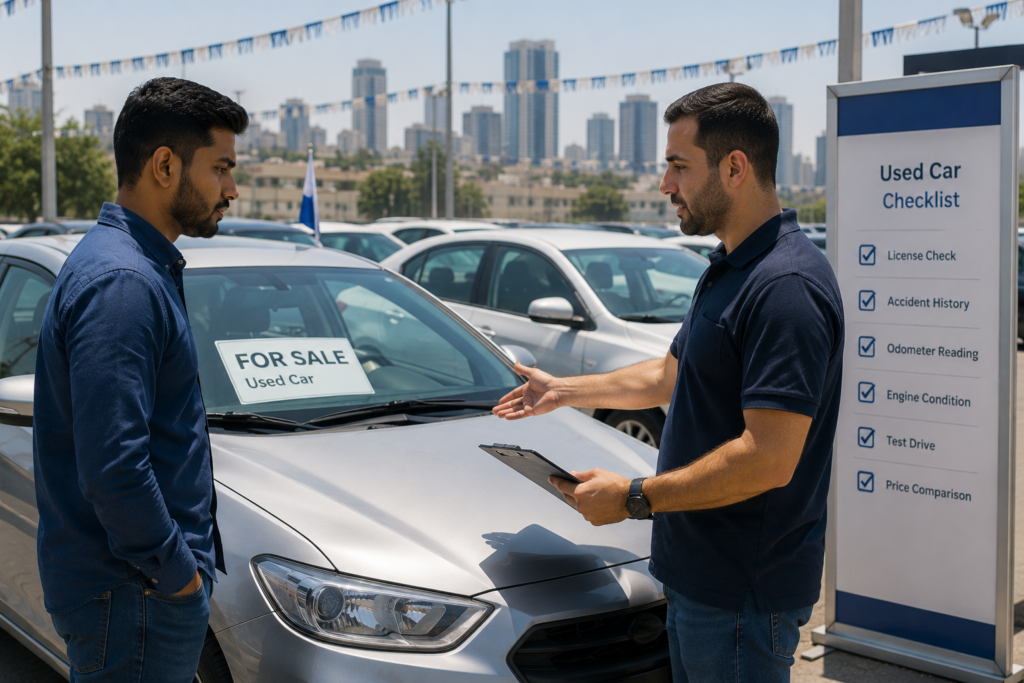
Checks before money moves
- Confirm ownership through the official registry
- Check tovet status and expiry
- Inspect the car in daylight
- Check tires, lights, dashboard warnings, air conditioning, mirrors
- Look for signs of repair or damage
- Ask about insurance and maintenance costs
Common buying mistakes
- Buying quickly because commuting feels urgent
- Paying a deposit too early
- Assuming a working engine means a good car
- Ignoring total ownership costs
- Not checking tovet status
Conclusion
A good used-car purchase depends on careful checking.
Focus on:
- Ownership
- Condition
- Legal status
- Total cost
In Israel, a careful “no” is often better than a fast “yes”.
Ask the Expert
“A private seller wants a deposit today before showing full documents. What should I check before paying anything?”
Submit your question: LankaConnect.com/ask-the-expert