


Introduction
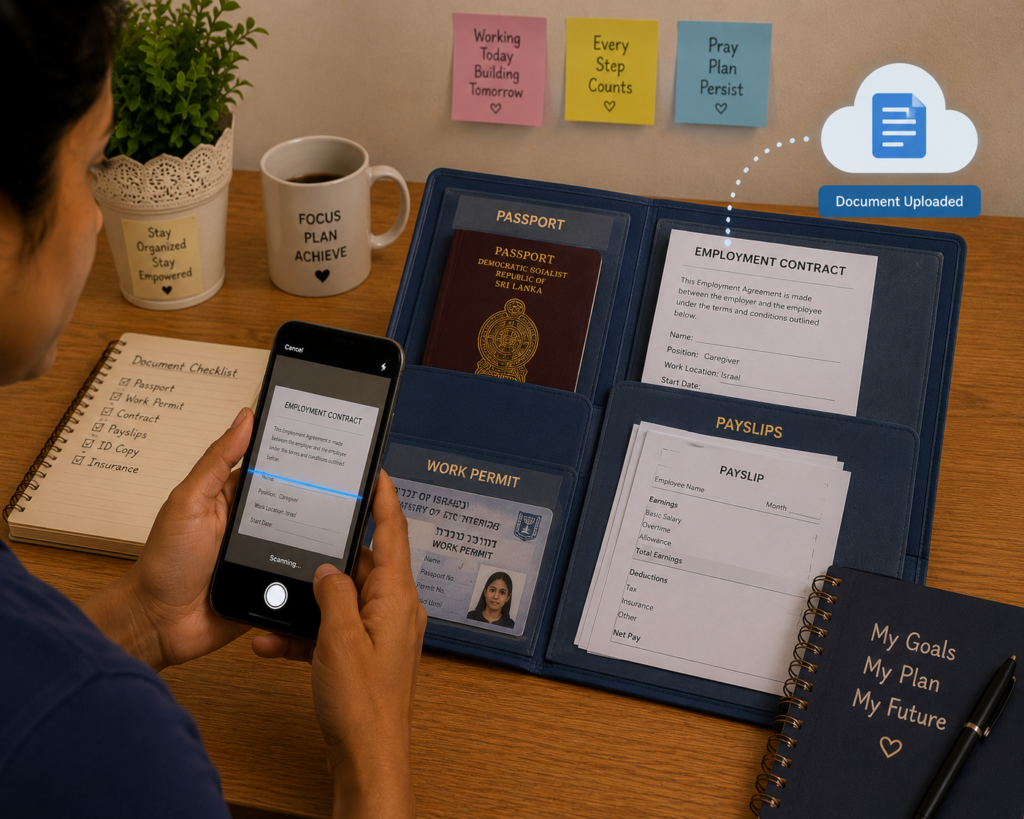
Workers rarely regret saving a document. They often regret not being able to find one. A missing contract, lost payslip, or unreadable photo can turn a small disagreement into a serious problem.
Good record keeping is not paperwork for paperwork’s sake. It is protection. It gives the worker a memory that does not depend on stress, tiredness, or old chats.
Which records matter most
- Passport and visa pages
- Employment contract and updates
- Monthly payslips and salary payment proof
- Rent agreements, deposits, and utility receipts
- Medical papers, prescriptions, and insurance records
- Tickets, appointments, complaint messages, and important screenshots
A storage system that does not collapse
The simplest strong system has two layers: one easy-to-open folder on the phone or cloud, and one second backup in email, a computer, or another secure cloud folder. File names should be clear. “Payslip_Jan_2026” is better than “IMG0042.” “Passport_front_page” is better than “photo.”
Workers should also keep documents by category. When everything sits in one giant folder, important proof becomes harder to find at the exact moment it is needed.
What people often forget
Many workers save only the first page of a document, not the whole document. Others save a screenshot that cuts off the date or amount. Some keep a paper copy in a bag but never make a digital copy. These small mistakes matter later because disputes often depend on full pages, dates, and visible totals.
Another forgotten habit is saving outgoing messages after important calls or meetings. A short written summary can become valuable proof of what was said.
When a document is missing or damaged
Missing documents are stressful, but most can be recovered or replaced if the worker acts early. For payslips, ask the employer directly. Most employers keep records, and a simple written request is often enough. For visa pages or official stamps, contact the relevant authority or a legal advisor who works with foreign workers before the situation becomes urgent.
The most important thing is not to wait. A missing document that is noticed six months before it matters can usually be replaced. The same document noticed one week before a dispute or a departure becomes a serious problem with fewer options.
How long to keep records
Many workers delete old messages and files to free space on their phones, not realizing that a payslip from two years ago may still be needed for a legal claim, a reference, or a future visa application. A general rule is to keep all employment-related records for at least two years after the work period ends. Storage space on a cloud account is cheap. Replacing a missing payslip after leaving Israel is often impossible.
Conclusion
Keeping records well is one of the cheapest forms of protection a worker can build. It reduces confusion, strengthens complaints when needed, and makes future planning easier.
A useful test is simple: if you needed your most important papers in ten minutes, could you find them? If not, that is where to start.