



அறிமுகம்
நோய் அல்லது காயத்திற்குப் பிறகு மீண்டும் பணிக்குத் திரும்புவது என்பது, உடல்நிலை தேறுவது மட்டுமல்ல.
உண்மையான கேள்வி இதுதான்:
- உங்கள் உடல் தயாராக உள்ளதா?
- மருத்துவர் ஏதேனும் கட்டுப்பாடுகள் விதித்தாரா?
- நீங்கள் பாதுகாப்பாகத் திரும்புகிறீர்களா?
பல தொழிலாளர்கள் நிதி நெருக்கடி அல்லது வேலையை இழந்துவிடுவோமோ என்ற பயம் காரணமாக முன்கூட்டியே பணிக்குத் திரும்புகின்றனர். இது நிலைமையை மேலும் மோசமாக்கக்கூடும்.
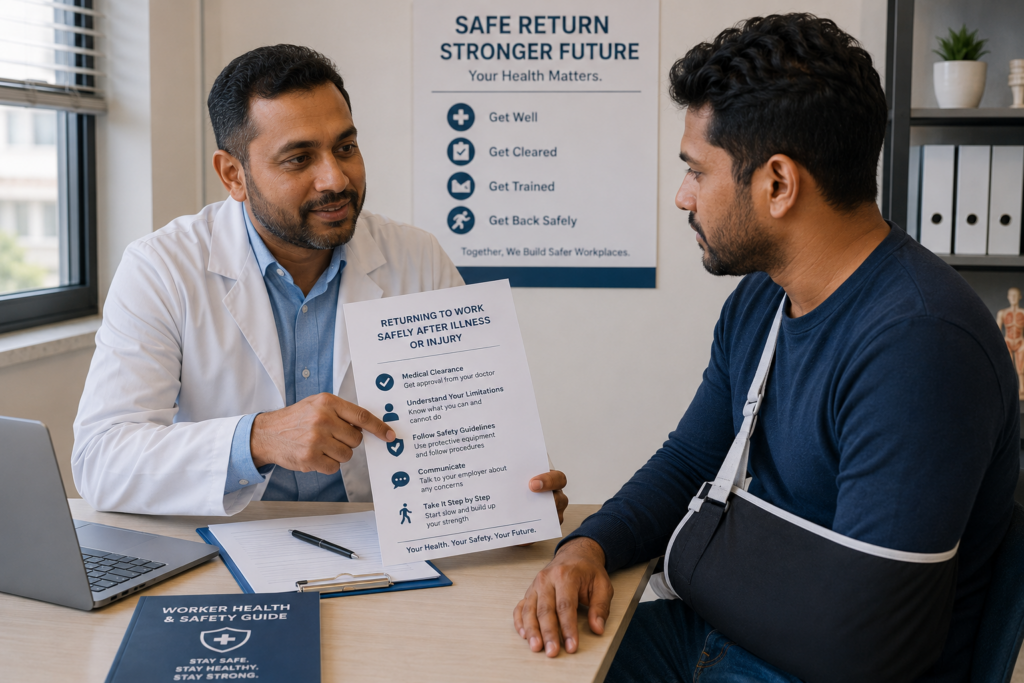
உங்கள் உடல்நலத்தையும் உரிமைகளையும் பாதுகாத்துக்கொண்டு, எவ்வாறு பாதுகாப்பாகப் பணிக்குத் திரும்புவது என்பதை இந்த வழிகாட்டி விளக்குகிறது.
முதல் கேள்வி: இது என்ன வகையான வழக்கு?
இரண்டு வெவ்வேறு சூழ்நிலைகள் உள்ளன:
சாதாரண நோய்
- தற்காலிக நோய்
- ஓய்வு மற்றும் சிகிச்சையின் மூலம் குணமடைதல்
இந்த விஷயத்தில், உடல்நல விடுப்பும் மருத்துவச் சான்றிதழ்களும் முக்கியமானவை.
வேலை காயம்
- வேலையால் ஏற்படும் காயம்
- பணியின் போது அல்லது வழியில் ஏற்படும் விபத்து
இந்த நிலைமை கூடுதல் உரிமைகள் மற்றும் இழப்பீடுகளை உள்ளடக்கியிருக்கலாம்.
உடல்நிலை தேறுவது முழுமையான குணமடைதல் ஆகாது.
பல தொழிலாளர்கள் இந்தத் தவறைச் செய்கிறார்கள்.
நீங்கள் நலமாக உணர்ந்தாலும்:
- உங்களுக்கு இன்னும் வரம்புகள் இருக்கலாம்
- உங்கள் உடல் முழுமையாகத் தயாராக இல்லாமல் இருக்கலாம்.
உதாரணங்கள்:
- நீங்கள் நடக்கலாம், ஆனால் கனமான பொருட்களைத் தூக்கக் கூடாது.
- வலி குறைவாக உள்ளது, ஆனாலும் இன்னும் இருக்கிறது.
- நீங்கள் நன்றாக உணர்கிறீர்கள், ஆனால் விரைவில் சோர்வடைந்து விடுகிறீர்கள்.
எப்போதும் உங்கள் உண்மையான நிலையைச் சரிபார்க்கவும்.
மருத்துவரின் அறிவுரைகளைக் கவனமாகப் படிக்கவும்.
பணிக்குத் திரும்புவதற்கு முன், உங்கள் மருத்துவச் சீட்டை மதிப்பாய்வு செய்யவும்.
இதில் பின்வருவன அடங்கலாம்:
- முழு ஓய்வு
- பகுதி ஓய்வு
- லேசான பணிகள் மட்டும்
- தூக்க வேண்டாம்
- வரையறுக்கப்பட்ட வேலை நேரம்
- பின்தொடர்தல் தேதி
இந்த அறிவுறுத்தல்கள் பின்பற்றப்பட வேண்டும்.
உங்கள் முதலாளியுடன் தெளிவாகத் தொடர்பு கொள்ளுங்கள்
திரும்புவதற்கு முன்:
- உங்கள் முதலாளிக்கு எழுத்துப்பூர்வமாகத் தெரிவிக்கவும்
- தொடர்புடைய மருத்துவக் குறிப்புகளைப் பகிரவும்
- ஏதேனும் கட்டுப்பாடுகள் இருந்தால் விளக்கவும்
இது பிற்காலத்தில் தவறான புரிதல்கள் ஏற்படுவதைத் தடுக்கிறது.
உங்களுக்கு வரம்புகள் இருந்தால், வேலையைத் தொடங்குவதற்கு முன் அவற்றைப் பற்றி விவாதிக்கவும்.
வேலை காயத்திற்குப் பிறகு நீங்கள் திரும்பினால்
காயம் தொடர்பான அனைத்து ஆவணங்களையும் பத்திரமாக வைத்துக் கொள்ளவும்:
- முதல் மருத்துவ அறிக்கை
- படிவம் BL/250
- மருத்துவச் சான்றிதழ்கள்
- பின்தொடர் அறிக்கைகள்
நீங்கள் மீண்டும் பணிக்குத் திரும்பிய பின்னரும் கூட, இந்த ஆவணங்கள் உங்கள் உரிமைகளைப் பாதிக்கக்கூடும்.
தேவைப்பட்டால் படிப்படியாகத் திரும்பவும்
பாதுகாப்பான திரும்புதல் பெரும்பாலும் படிப்படியாகவே நிகழும்.
இதில் பின்வருவன அடங்கலாம்:
- குறைவான வேலை நேரம்
- இலகுவான பணிகள்
- மேலும் இடைவேளைகள்
- கடுமையான உடல் உழைப்பைத் தவிர்ப்பது
படிப்படியாகத் திரும்புவது மீண்டும் காயம் ஏற்படும் அபாயத்தைக் குறைக்கிறது.
பணிக்குத் திரும்பிய பிறகு ஏற்படும் எச்சரிக்கை அறிகுறிகள்
உங்கள் உடலைக் கவனியுங்கள்.
நீங்கள் கவனித்தால்: நின்று உதவி தேடுங்கள்.
- அதிகரிக்கும் வலி
- வீக்கம்
- பலவீனம்
- தலைச்சுற்றல்
- சுவாசப் பிரச்சனைகள்
- அறிகுறிகள் மோசமடைந்து வருகின்றன
இந்த அறிகுறிகளைப் புறக்கணிக்காதீர்கள்.
மருத்துவப் பின்தொடர்வை தொடரவும்
வேலைக்குத் திரும்புவதால் சிகிச்சை முடிந்துவிட்டது என்று அர்த்தமல்ல.
நீங்கள் செய்ய வேண்டியவை:
- தொடர் சந்திப்புகளில் கலந்துகொள்ளுங்கள்
- முழுமையான மருந்து
- அறிகுறிகள் தொடர்ந்தால் மருத்துவரை அணுகவும்.
தொடர்புடைய அனைத்து ஆவணங்களையும் பத்திரமாக வைத்துக் கொள்ளவும்.
என்ன செய்யக்கூடாது
- அறிகுறிகளை மறைக்காதீர்கள்
- மருத்துவக் கட்டுப்பாடுகளைப் புறக்கணிக்காதீர்கள்
- மிகவும் சீக்கிரம் திரும்பி வராதீர்கள்
- ஆவணங்களைத் தூக்கி எறியாதீர்கள்
- உங்களுக்குத் தீங்கு விளைவிக்கக்கூடிய பணிகளை ஏற்காதீர்கள்.
இரண்டாவது காயம் முதலாவதை விட அதிக தீவிரமானதாக இருக்கலாம்.
கூடுதல் உதவி தேவைப்படும்போது
காயம் உங்கள் வேலை செய்யும் திறனை நீண்ட காலத்திற்குப் பாதித்தால்:
- கூடுதல் ஆதரவு விருப்பங்கள் இருக்கலாம்
- உங்கள் வேலையை நீங்கள் சரிசெய்ய வேண்டியிருக்கலாம்
பாதுகாப்பற்றதாக இருந்தால், அதே நிலைமைகளுக்குத் திரும்ப வேண்டும் என்று எண்ணிவிடாதீர்கள்.
முடிவு
பாதுகாப்பாக பணிக்குத் திரும்புவது பின்வருவனவற்றை அடிப்படையாகக் கொண்டது:
- மருத்துவ வழிகாட்டுதல்
- தெளிவான தொடர்பு
- யதார்த்தமான வரம்புகள்
முறையாகத் திரும்புவதற்கு நேரம் ஒதுக்குவது உங்கள் உடல்நலத்தையும் எதிர்காலத்தையும் பாதுகாக்கிறது.
இறுதி குறிப்பு
மீண்டும் பணிக்குத் திரும்புவது மீட்சியின் ஒரு பகுதியே தவிர, அதன் முடிவல்ல.
உங்கள் உடலை மதியுங்கள், மருத்துவ ஆலோசனையைப் பின்பற்றுங்கள், அவசரப்படாதீர்கள்.