


Introduction
Community groups can help you find a room, a ride, a festival event, a job lead or an urgent update in minutes. The same groups can also spread panic, gossip, scams or private information just as quickly. That is why it helps to know which groups are truly useful and which ones only create noise.
The safest worker is not the worker who trusts no one. It is the worker who knows how to use groups with limits, judgment and the right expectations.
Do not confuse visibility with trust
Just because someone posts often, sounds confident or has many mutual contacts does not mean the information is true. In large groups, wrong advice spreads fast because it sounds urgent or emotional. Good groups reduce confusion. Bad groups multiply it.
WhatsApp itself recommends learning to spot scams, using the official app only, keeping groups safe and controlling who can add you to groups. Forwarded-many-times content should be treated carefully, not automatically believed.
Practical safety rules
- Never post passport, visa, bank details or salary slips in groups.
- Treat screenshots as permanent; once shared, they can travel far beyond the original group.
- Check identity before sending money for rooms, tickets, donations or second-hand items.
- Be careful with links that ask for codes, passwords or account details. Cyber authorities in Israel repeatedly warn about phishing and impersonation.
- Keep private disagreements out of large public groups when possible.
How to use groups well without burning out
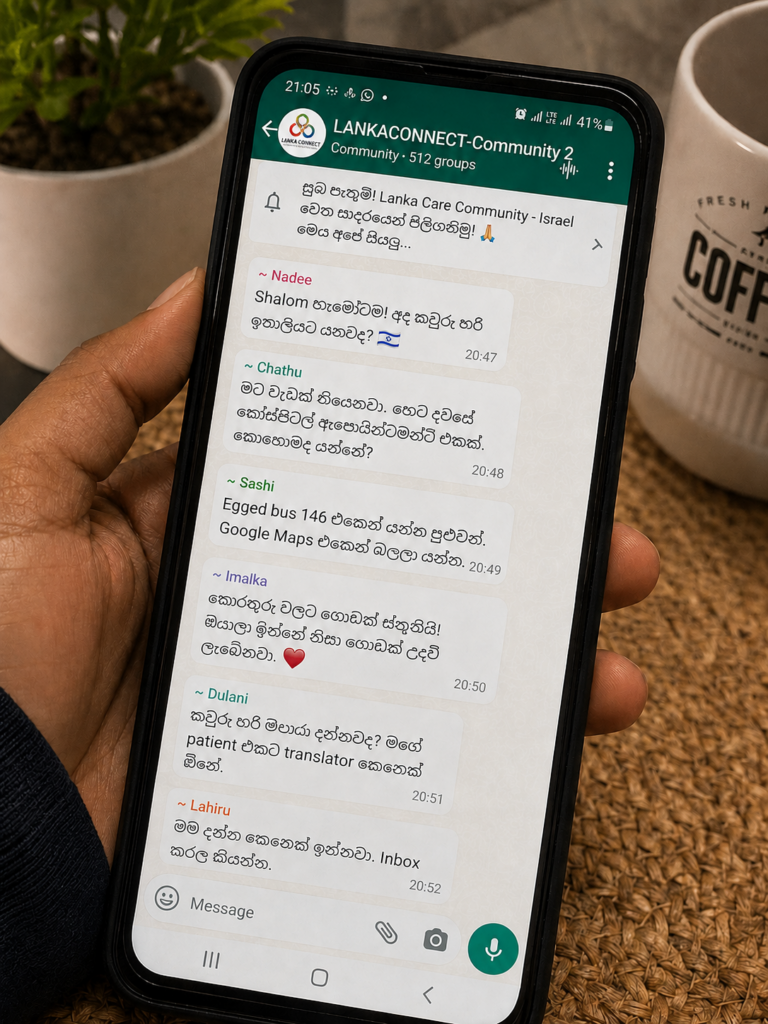
Keep some groups on mute. Stay in the groups that genuinely help your life and leave the groups that only create stress. Save useful posts in a personal note instead of reading the same noisy conversation again and again. LankaConnect groups can be a good example of what to look for: support, connection and practical information for Sri Lankans in Israel, with different groups for different topics instead of one chaotic chat for everything.
If you run a community group, set rules clearly: no fake fundraising, no document posting, no harassment, and no private contact details without permission. If you join a group, check whether it has a clear purpose. A job group, a housing group, an events group and a support group do not need the same tone or the same kind of messages.
Conclusion
Community groups are tools, not trusted families by default. Use them for information, opportunity and connection, but protect your privacy, your money and your peace of mind. When a group is well managed and built around real support, it can make daily life easier instead of heavier.