



அறிமுகம்
மருத்துவ ஆவணங்களை ஒழுங்கமைத்து வைப்பது, அவை உங்களுக்கு உண்மையில் தேவைப்படும் தருணம் வரை முக்கியமற்றதாகத் தோன்றலாம்.
ஒரு பணியாளரிடம் காண்பிக்கச் சொல்லும்போது:
- ஒரு மருந்துச்சீட்டு
- ஒரு ரசீது
- ஒரு மருத்துவமனை அறிக்கை
- நோய்க்கான ஆதாரம்
அமைப்புமுறை இன்றியமையாததாகிறது.
இஸ்ரேலில் உள்ள வெளிநாட்டுத் தொழிலாளர்களுக்கு, மருத்துவ ஆவணங்கள் என்பவை உடல்நலம் சார்ந்தவை மட்டுமல்ல. அவை காப்பீட்டுக் கோரிக்கைகள், பணியிட காயங்களுக்கான உரிமைகள், நோய் விடுப்பு ஊதியம் மற்றும் எதிர்கால சிகிச்சை ஆகியவற்றையும் பாதிக்கக்கூடும்.
அமைப்பு ஏன் முக்கியமானது
மருத்துவ சிகிச்சையானது பெரும்பாலும் பல படிநிலைகளை உள்ளடக்கியுள்ளது:
- மருத்துவமனை வருகை
- மருந்தகம்
- மருத்துவமனை
- தொடர் சிகிச்சை
ஆவணங்கள் ஒழுங்கமைக்கப்படாவிட்டால்:
- மருத்துவர்கள் பரிசோதனைகளை மீண்டும் செய்யலாம்
- காப்பீடு பணம் செலுத்துவதில் தாமதம் ஏற்படலாம்
- கோரிக்கைகள் பலவீனமடையக்கூடும்
தெளிவான பதிவுகள் நேரத்தை மிச்சப்படுத்துவதோடு மன அழுத்தத்தையும் குறைக்கின்றன.
நீங்கள் வைத்திருக்க வேண்டிய ஆவணங்கள்
எப்போதும் இவற்றின் நகல்களை வைத்திருக்கவும்:
- மருந்துச்சீட்டுகள்
- மருந்தக ரசீதுகள்
- மருத்துவமனை வருகை சுருக்கங்கள்
- மருத்துவமனை வெளியேற்ற ஆவணங்கள்
- பரிசோதனை முடிவுகள் (இரத்தப் பரிசோதனைகள், இமேஜிங்)
- பரிந்துரை படிவங்கள்
- காப்பீட்டுத் தொடர்பு
- மருத்துவக் குறிப்புகள் (நோய் விடுப்பு அல்லது கட்டுப்பாடுகள்)
பிரச்சினை வேலை சம்பந்தப்பட்டது என்றால், பின்வருவனவற்றையும் நினைவில் கொள்ளவும்:
- விபத்து விவரங்கள்
- முதலாளி தொடர்பு
- வேலை காய படிவங்கள் (BL/250 போன்றவை)
ஒரு எளிய அமைப்பை உருவாக்குங்கள்
எளிதாகப் பயன்படுத்தக்கூடிய அமைப்பே சிறந்த அமைப்பாகும்.
இயற்பியல் சேமிப்பு
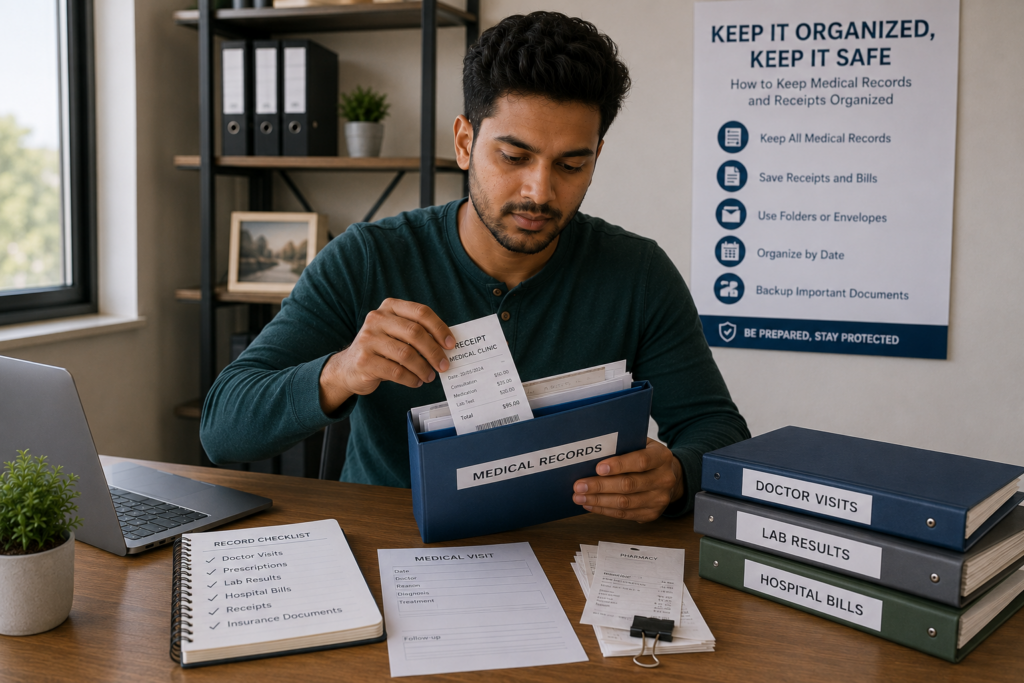
எல்லா ஆவணங்களையும் ஒன்றாக வைக்க ஒரு கோப்பு அல்லது உறையைப் பயன்படுத்தவும்.
டிஜிட்டல் சேமிப்பு
உங்கள் தொலைபேசி, மின்னஞ்சல் அல்லது கிளவுட் சேமிப்பகத்தில் ஒரு கோப்புறையை உருவாக்கவும்.
பரிந்துரைக்கப்பட்ட கட்டமைப்பு:
- மருத்துவர் சந்திப்புகள்
- மருத்துவமனை ஆவணங்கள்
- மருந்துச்சீட்டுகள்
- ரசீதுகள்
- சோதனைகள்
- வேலை காயம்
ஆவணங்களை அதே நாளில் ஒழுங்கமைக்கவும்
காத்திருக்க வேண்டாம்.
நீங்கள் ஆவணங்களைப் பெறும் அதே நாளில்:
- தெளிவான புகைப்படங்களை எடுங்கள்
- பெயர்களையும் தேதிகளையும் சரிபார்க்கவும்
- அவற்றை உங்கள் கோப்புறையில் சேமிக்கவும்
- அவற்றை காப்புப் பிரதி எடுக்கவும் (மின்னஞ்சல் அல்லது கிளவுட்).
தெளிவான கோப்புப் பெயர்களைப் பயன்படுத்தவும்
எளிய வடிவமைப்பைப் பயன்படுத்தவும்:
தேதி + இடம் + ஆவண வகை
உதாரணம்:
- 2026-03-14 மருத்துவமனை வருகை
- 2026-03-14 மருத்துவமனையிலிருந்து வெளியேற்றம்
இது ஆவணங்களைப் பின்னர் எளிதாகக் கண்டறிய உதவுகிறது.
ரசீதுகள் ஏன் முக்கியமானவை
ரசீதுகள் என்பவை பணம் செலுத்தியதற்கான ஆதாரம் மட்டுமல்ல.
அவை மேலும் காட்டுகின்றன:
- சிகிச்சை தேதி
- இடம்
- சேவையின் வகை
அவை பின்வருவனவற்றிற்கு முக்கியமானவை:
- காப்பீட்டுத் திருப்பிச் செலுத்துதல்
- வேலை காயத்திற்கான கோரிக்கைகள்
- சிகிச்சையைக் கண்காணித்தல்
அவற்றை தூக்கி எறியாதீர்கள்.
ஆவணங்களை எவ்வளவு காலம் வைத்திருக்க வேண்டும்
ஆவணங்களை முன்கூட்டியே நீக்க வேண்டாம்.
அவற்றை வைத்துக்கொள்ளுங்கள்:
- சிகிச்சை முழுமையாக முடியும் வரை
- நிலுவையில் உள்ள உரிமைகோரல்கள் இல்லாத வரை
- கடுமையான காயங்கள் அல்லது நோய்களுக்கு அதிக காலம்
முக்கியமான பதிவுகள் நீண்ட காலத்திற்குப் பாதுகாக்கப்பட வேண்டும்.
உங்கள் தனியுரிமையைப் பாதுகாக்கவும்
மருத்துவத் தகவல் என்பது தனிப்பட்டதாகும்.
நீங்கள் செய்ய வேண்டியவை:
- தேவைப்படும்போது மட்டும் ஆவணங்களைப் பகிரவும்.
- முக்கியமான ஆவணங்களை மொத்தமாக அனுப்புவதைத் தவிர்க்கவும்.
- உங்கள் பதிவுகளைப் பாதுகாப்பாக வைத்திருங்கள்
ஒழுங்கமைப்பு உங்களுக்கு மிகவும் உதவும் போது
நல்ல ஒழுங்கமைப்பு பின்வரும் சமயங்களில் உதவுகிறது:
- உங்களுக்கு தொடர் சிகிச்சை தேவை
- காப்பீட்டு நிறுவனம் ஆதாரம் கேட்கிறது
- ஒரு தகராறு உள்ளது
- உங்கள் தரப்பை நீங்கள் விளக்க வேண்டும்.
தெளிவான பதிவுகள் எல்லாவற்றையும் எளிதாக்குகின்றன.
பொதுவான தவறுகள்
- ஆவணங்களை வெவ்வேறு இடங்களில் வைத்திருப்பது
- புகைப்படங்கள் எடுக்கவில்லை
- ரசீதுகளை தொலைத்தல்
- கோப்புகளை காப்புப் பிரதி எடுக்கவில்லை
- ஒழுங்கமைக்க அதிக நேரம் காத்திருப்பது
முடிவு
மருத்துவ அமைப்பு என்பது குறைபாடற்றதாக இருப்பது பற்றியதல்ல.
உங்களுக்கு உதவி தேவைப்படும்போது உங்கள் வாழ்க்கையை எளிதாக்குவதே இதன் நோக்கம்.
தெளிவான மற்றும் ஒழுங்கமைக்கப்பட்ட பதிவுகளைப் பராமரிக்கும் பணியாளர்கள்:
- நேரத்தை மிச்சப்படுத்துங்கள்
- மன அழுத்தத்தைக் குறைக்கவும்
- அவர்களின் உரிமைகளைப் பாதுகாக்கவும்
இறுதி குறிப்பு
சிறந்த பழக்கம் எளிமையானது:
ஆவணங்களைப் பெற்ற அன்றே அவற்றை ஒழுங்கமைக்கவும்.
இந்த ஒரு பழக்கம் எதிர்காலத்தில் பல பிரச்சனைகளைத் தடுக்கும்.