


Introduction
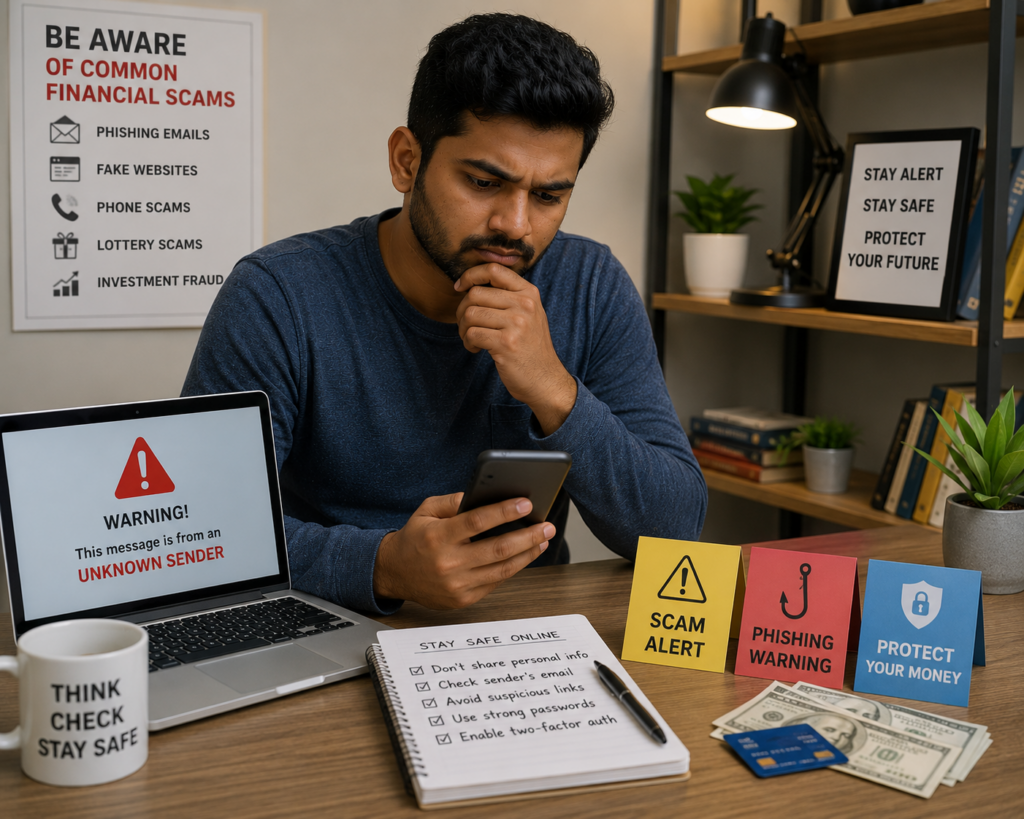
Most people do not get tricked because they are careless. They get tricked because the message arrives at the wrong moment: during work, during stress, after sending money, or when they are already worried that something might be wrong with the account.
The safest readers are not the ones who distrust everything. They are the ones who recognize the pattern early: urgency, fear, borrowed authority, and a request for something sensitive before they have had time to think.
Important official background
Financial authorities have warned repeatedly about criminals pretending to be banks, card companies, or official institutions. Phishing is an attempt to steal personal or financial information through fake links, fake pages, or misleading messages that look real.
Many scam messages look professional. They use official language, logos, and timing that creates pressure.
The four scam patterns workers see most often
Fake authority
Someone claims to be from:
- A bank
- A card company
- A transfer service
- Police or official authority
They sound professional to gain trust.
Fake urgency
Common messages:
- “Your account is blocked”
- “Suspicious activity detected”
- “Act now to secure your money”
The goal is to make you act quickly without thinking.
Fake help
The person sounds helpful and calm, then asks for:
- Codes
- Passwords
- Card details
They pretend to protect you while actually collecting information.
Social trust scams
These come through:
- Community contacts
- Friends of friends
- Social media
They feel safer but can still be dangerous.
How scams look in real life
Examples include:
- Fake SMS with a link
- WhatsApp messages pretending to be support
- Phone calls asking for security codes
- Sellers requesting payment without proof
The pattern is always the same: pressure first, request second.
The rule that protects you most
Never share:
- Codes
- Passwords
- Card details
Real institutions do not require this information through pressure.
How to slow down a scam
If something feels urgent:
- Do not click the link
- Open your official banking app directly
- Call the official number
- Take time before acting
Even a short pause can stop a scam.
Community and family risk
Scams can spread through:
- Family
- Friends
- Community groups
Teach others to:
- Avoid urgent money requests
- Verify details
- Protect personal information
What to do if you already shared information
Act immediately:
- Stop using the suspicious service
- Change passwords
- Contact your bank
- Block your card if needed
- Save all evidence
Speed is more important than embarrassment.
Real-life examples
One worker received a fake bank message after a long workday and almost clicked because he was tired.
Another shared a code during a call that sounded official.
A third lost money through a community connection without proper proof.
Key habits that protect you
Before problems happen
- Do not click suspicious links
- Do not share sensitive information
- Use official channels only
After something suspicious happens
- Save evidence
- Act quickly
- Inform your bank
- Warn others
Conclusion
Scams succeed when they control your speed and emotions.
The moment you slow down, verify information, and refuse to share sensitive details, most scams fail.
Final Tip
Stay calm, verify everything, and never act under pressure —
this is your strongest protection.