


Keywords: emergency numbers Israel, police 100, MDA 101, fire 102, Home Front Command 104, HaKeren, urgent help Israel, foreign workers Israel, LankaConnect guide
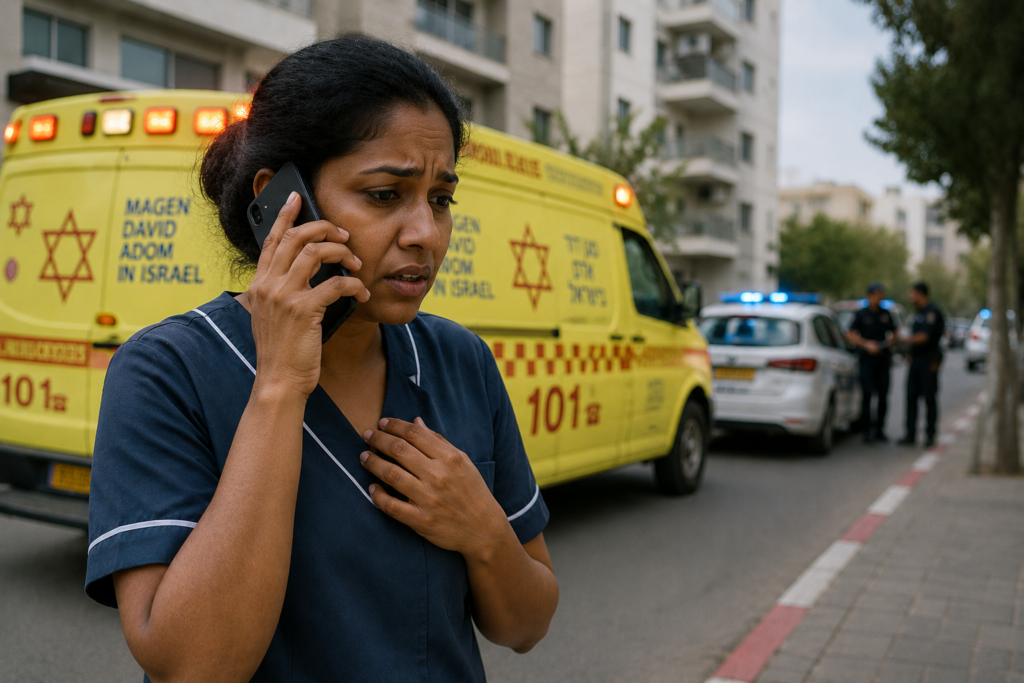
When something goes wrong in Israel, the hardest part is often the first thirty seconds. You have to choose a number, explain the problem, give your location, and do it while you are scared, injured, or trying to help someone else.
This guide is for Sri Lankan foreign workers who need a practical memory tool: which number fits which emergency, what information helps most, and which small preparations make a real difference before panic begins.
The numbers that matter most
What to say in the first 20 seconds
When you call emergency services, start with the emergency itself. Say what happened, whether someone is in immediate danger, and your location. The operator does not need your background story first.
Keep it short: “I need ambulance.” “One man is not breathing.” “Address: 14 Herzl Street, third floor, Tel Aviv.” Or: “Police needed. A man is threatening us now. We are at…” Short sentences land faster than explanations.
When you do not know the full address, give nearby landmarks, the building entrance, apartment number, floor, or the nearest bus stop or shop name. In a public place, open your map app while you speak. Save your full home address in your phone before a crisis happens — not while one is unfolding.
Which number fits which situation
Call 101 for chest pain, breathing problems, loss of consciousness, heavy bleeding, serious injury, suspected stroke, or severe allergic reactions.
Call 100 for violence, threats, assault, a passport taken by force, suspected crime, or immediate danger from another person.
Call 102 for smoke, fire, gas-related danger, people trapped, or urgent rescue.
Call 104 or check the Pikud HaOref app for siren guidance, shelter orders, or questions during a security event.
Call 112 if you are unsure which number to dial first — it routes to the right service from any phone.
Call 1-800-354-442 (HaKeren) for wage theft, withheld documents, or employer abuse — not an emergency dispatch line, but an important first call after the immediate danger has passed.
Prepare before anything happens
Emergency readiness is mostly boring work done on quiet days. Save all emergency numbers in your contacts in English and, if useful, in Sinhala. Keep your full address written in your phone, on paper in your room, and inside your wallet.
Keep a small emergency folder with a photo of your passport, visa page, health insurance card if you have one, allergy or medication list, and at least one emergency contact. If your phone battery dies, a paper copy matters.
If language becomes the problem
In real emergencies, operators can often work with very simple English, but do not assume long explanations will work. Learn a few short lines in advance: “I need police.” “I need ambulance.” “No Hebrew.” “Please speak slowly.” “Address is…” “He is bleeding.” “She cannot breathe.”
If another person is helping to translate, keep control of the basic facts yourself. One person should talk to the operator. One person should stay with the patient or at-risk person. One person can open the door, send live location, or gather documents. Too many voices on one call slow everything down.
Common mistakes that make emergencies worse
Calling friends before calling emergency services. Friends can help, but not before the urgent call is placed.
Saying ‘come quickly’ without giving a usable location.
Handing the phone to someone who does not know the address or what happened.
Staying in a dangerous place to keep filming or to collect belongings. Safety and immediate help come first.
After the immediate danger passes
Write down the time, service called, operator instructions, and what happened next. Save hospital papers, police reference numbers, and photos of any written report.
If the emergency involved abuse, withheld documents, serious threats, or a workplace problem, your next call may be to the Ministry of Labor, PIBA, HaKeren (1-800-354-442), a legal aid service, or your embassy. That is not the first call in a life-threatening moment, but it is often the right call hours later.
Conclusion
In a real emergency, speed comes from preparation, not from bravery. People move faster when the numbers are already saved, the address is easy to read from the phone, and one short sentence is ready before the mind freezes.
You do not need perfect language to get help. You need the right number, the right address, and one clear opening line.