



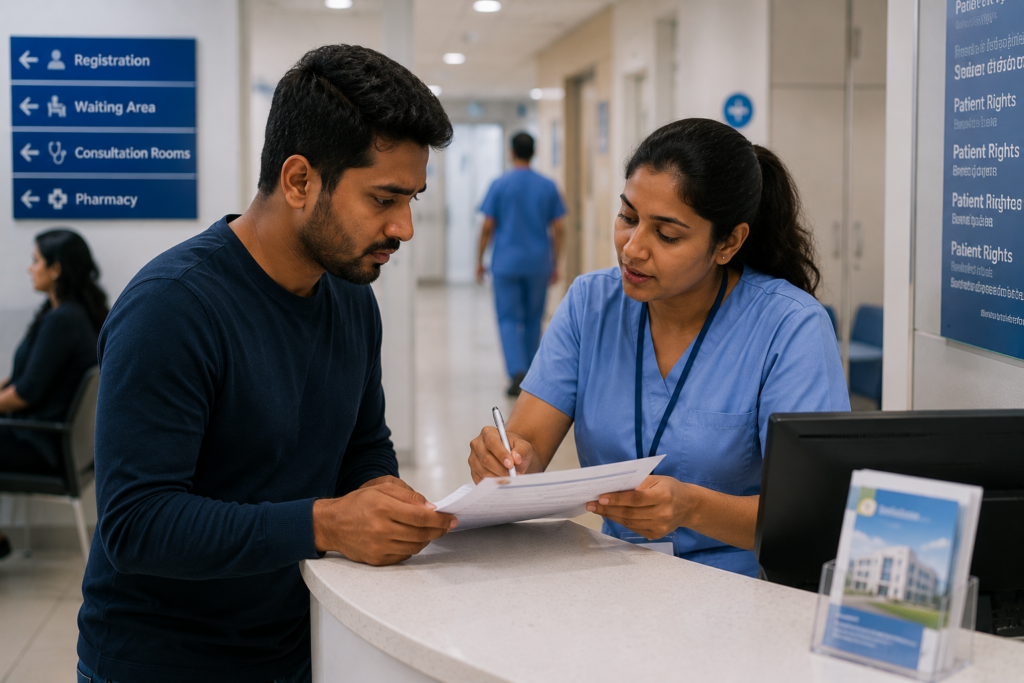
அறிமுகம்
மருத்துவமனைகள், குறிப்பாக வெளிநாட்டுப் பணியாளர்களுக்கு, குழப்பமானதாக இருக்கலாம். மொழித் தடைகள், பணம் செலுத்துவதில் உள்ள நிச்சயமற்ற தன்மை மற்றும் ஆவணங்களைப் பற்றிய புரிதல் இல்லாமை ஆகியவை அந்த அனுபவத்தை மன அழுத்தமானதாக மாற்றக்கூடும்.
மருத்துவமனை வருகைகளின் போது என்ன நடக்கும், மருந்துச் சீட்டுகள் எவ்வாறு செயல்படுகின்றன, மற்றும் நீங்கள் கட்டாயம் வைத்திருக்க வேண்டிய ஆவணங்கள் எவை என்பதை இந்த வழிகாட்டி விளக்குகிறது.
நீங்கள் மருத்துவமனைக்குச் செல்வதற்கு முன்
நிலைமை அவசரமானதாக இல்லையென்றால், ஒரு மருத்துவமனையால் உங்களுக்குச் சிகிச்சை அளிக்க முடியுமா என்று முதலில் சரிபார்க்கவும்.
மருத்துவமனைகள் முக்கியமானவைதான், ஆனால் அவை எப்போதும் சிறந்த முதல் தேர்வாக இருப்பதில்லை.
உங்களுடன் எடுத்துச் செல்லுங்கள்:
- கடவுச்சீட்டு அல்லது அடையாள அட்டை
- காப்பீட்டு விவரங்கள்
- வேலையளிப்பவரைத் தொடர்பு கொள்ள (பொருத்தமானால்)
- தற்போதைய மருந்துகளின் பட்டியல்
- முந்தைய மருத்துவ ஆவணங்கள்
இது நேரத்தைச் சேமிக்கவும் குழப்பங்களைத் தவிர்க்கவும் உதவுகிறது.
மருத்துவமனையில் என்ன நடக்கிறது
நீங்கள் வந்து சேரும்போது, இந்த செயல்முறையில் பொதுவாக பின்வருவன அடங்கும்:
பதிவு
உங்கள் விவரங்கள் பதிவு செய்யப்பட்டுள்ளன.
வகைப்படுத்துதல்
உங்கள் நிலைமையின் தீவிரத்தை மருத்துவப் பணியாளர்கள் தீர்மானிப்பார்கள்.
நோயாளிகள் தாமதமாக வந்தாலும், மிகவும் தீவிரமான நோய்களால் பாதிக்கப்பட்டவர்களுக்கு முதலில் சிகிச்சை அளிக்கப்படுகிறது.
சிகிச்சை
மருத்துவமனை பின்வருவனவற்றைச் செய்யலாம்:
- உங்களை ஆராயுங்கள்
- பரிசோதனைகளுக்கு உத்தரவிடவும் (இரத்தம், எக்ஸ்-ரே, இமேஜிங்)
- சிகிச்சை கொடுங்கள்
- மருந்து பரிந்துரைக்கவும்
- தேவைப்பட்டால் உங்களை அனுமதிக்கவும்
என்ன நடக்கிறது என்பதைப் புரிந்துகொள்ள, செயல்முறையின் போது கேள்விகளைக் கேளுங்கள்.
வெளியேற்றச் சுருக்கம் இல்லாமல் வெளியேற வேண்டாம்
மருத்துவமனையிலிருந்து வெளியேற்றப்படும் ஆவணம் மிக முக்கியமான ஆவணங்களில் ஒன்றாகும்.
இதில் பொதுவாக அடங்குபவை:
- வருகைக்கான காரணம்
- நோயறிதல்
- சிகிச்சை அளிக்கப்பட்டது
- அடுத்த கட்டங்களுக்கான வழிமுறைகள்
இந்த ஆவணம் இல்லாமல், எதிர்கால சிகிச்சை மேலும் கடினமாகிவிடும்.
புறப்படுவதற்கு முன், சரிபார்க்கவும்:
- உங்கள் பெயர் சரியானது
- ஆவணம் தெளிவாகவும் படிக்கக்கூடியதாகவும் உள்ளது.
மருந்துச் சீட்டுகளைப் புரிந்துகொள்வது
மருந்துச்சீட்டு உங்கள் சிகிச்சைத் திட்டத்தின் ஒரு பகுதியாகும்.
புறப்படுவதற்கு முன், நீங்கள் புரிந்துகொண்டதை உறுதிப்படுத்திக் கொள்ளுங்கள்:
- மருந்தின் பெயர்
- மருந்தளவு
- ஒரு நாளைக்கு எத்தனை முறை
- எவ்வளவு நேரம் எடுக்க வேண்டும்
ஏதேனும் தெளிவாக இல்லையென்றால், உடனடியாகக் கேளுங்கள்.
தொடர்புடைய அனைத்து ஆவணங்களையும் பத்திரமாக வைக்கவும்.
எப்போதும் நினைவில் கொள்ளுங்கள்:
- மருந்துச்சீட்டுகள்
- ரசீதுகள்
- சோதனை முடிவுகள்
- பரிந்துரை படிவங்கள்
- வெளியேற்ற சுருக்கம்
இவை பின்வருவனவற்றிற்கு முக்கியமானவை:
- தொடர் சிகிச்சை
- காப்பீடு
- வேலை தொடர்பான பிரச்சினைகள்
இது ஒரு வேலை தொடர்பான காயமாக இருந்தால்
மருத்துவமனை ஆவணங்கள் மேலும் முக்கியத்துவம் பெறுகின்றன.
உங்களுக்கு இது தேவைப்படலாம்:
- முதலாளியிடமிருந்து படிவம் BL/250
- மருத்துவச் சான்றிதழ்
- தேசிய காப்பீட்டிற்கான ஆவணங்கள்
இந்த ஆவணங்கள் உங்கள் உரிமைகளையும் இழப்பீட்டையும் பாதிக்கின்றன.
பணம் செலுத்துதல் மற்றும் ரசீதுகள்
சூழ்நிலையைப் பொறுத்து மருத்துவமனை வருகைகளுக்குக் கட்டணம் விதிக்கப்படலாம்.
ரசீதுகளை எப்போதும் பத்திரமாக வைத்திருங்கள், ஏனெனில் அவை பின்வரும் தேவைகளுக்காகத் தேவைப்படலாம்:
- காப்பீட்டுத் திருப்பிச் செலுத்துதல்
- சிகிச்சைக்கான ஆதாரம்
- சுகாதார உரிமைகோரல்கள்
ஒழுங்காக இருப்பது எப்படி
நீங்கள் வீட்டிற்குத் திரும்பிய பிறகு:
- அனைத்து ஆவணங்களையும் புகைப்படம் எடுக்கவும்.
- அவற்றை ஒரே கோப்புறையில் சேமிக்கவும்
- அவற்றை காப்புப் பிரதி எடுக்கவும் (மின்னஞ்சல் அல்லது கிளவுட்).
தெளிவான கோப்புப் பெயர்களைப் பயன்படுத்துங்கள், எடுத்துக்காட்டாக:
- தேதி + மருத்துவமனை + ஆவண வகை
இது பிற்காலத்தில் நேரத்தை மிச்சப்படுத்துகிறது.
பின்தொடர்தல் முக்கியமானது
மருத்துவமனைக்குச் செல்வது பெரும்பாலும் முதல் படியாக மட்டுமே அமைகிறது.
உங்களுக்கு இது தேவைப்படலாம்:
- தொடர் சந்திப்புகள்
- கூடுதல் சோதனைகள்
- தொடர் சிகிச்சை
இந்த அறிவுறுத்தல்களைப் புறக்கணிக்காதீர்கள்.
பொதுவான தவறுகள்
- சிறு பிரச்சனைகளுக்காக மருத்துவமனைக்குச் செல்கிறேன்
- வெளியேற்ற ஆவணங்கள் இல்லாமல் வெளியேறுதல்
- மருந்துச் சீட்டுகளை இழப்பது
- அறிவுறுத்தல்களைப் புரிந்து கொள்ளவில்லை
- ரசீதுகளை தூக்கி எறிதல்
முடிவு
இரண்டையும் நிர்வகிக்கும்போது மருத்துவமனை வருகைகள் எளிதாகின்றன:
- உங்கள் ஆரோக்கியம்
- உங்கள் ஆவணங்கள்
எப்போதும்:
- கேள்விகளைக் கேளுங்கள்
- ஆவணங்களை எடுத்துக் கொள்ளுங்கள்
- எல்லாவற்றையும் ஒழுங்காக வைத்திருங்கள்
இறுதி குறிப்பு
நீங்கள் மருத்துவமனையை விட்டு வெளியேறியவுடன் சிகிச்சை முடிந்துவிடுவதில்லை.
முறையான ஆவணப்படுத்தலும் தொடர் கவனிப்பும், சந்திப்பைப் போலவே முக்கியமானவை.