


Keywords: police stop Israel, police delay foreign worker, ID check Israel, police contact rights, LankaConnect guide
A police stop feels different when you are tired, working long hours, or worried about your visa. Even people who did nothing wrong can panic when an officer asks for ID, tells them to wait, or starts asking questions.
This guide is not about winning an argument. It is about reducing risk: how to stay calm, what to show, what to remember, and what to do afterwards when the contact becomes serious.
What usually happens in a routine stop
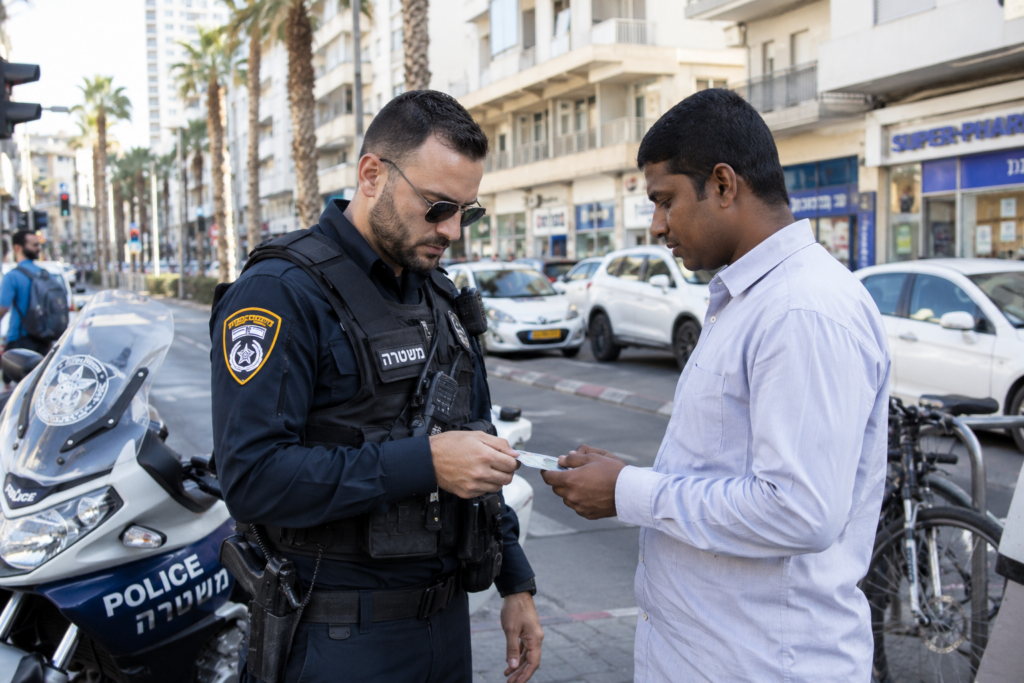
Many police contacts are short. An officer may ask for identification, ask where you live or work, check a vehicle, or ask you to wait while details are verified. For foreign workers, that usually means a passport or another official document together with your status papers.
The first goal is simple: keep a short stop short. Keep your hands visible, answer basic identity questions calmly, and avoid sudden movements, sarcasm, or physical resistance. Even when the stop feels unfair, the street is rarely the place to resolve it.
What to do in the first minutes
Take one breath before you speak. Ask politely if you may take out your ID. When your documents are on your phone, say that clearly before reaching for the device. When you do not understand what is being asked, say so early: “I speak limited Hebrew. Please speak slowly.”
Stay put when an officer asks you to wait, even when the wait feels long. Pay attention to the details: place, time, number of officers, vehicle number if visible, and the basic reason given for the stop. Those details matter later when the interaction becomes a complaint or a legal matter.
Questions workers often worry about
Many foreign workers fear that any police contact means immediate detention or deportation. A routine check may remain a routine check. Police contact becomes more serious only if there is suspected violence, theft, document problems, a warrant, or refusal to cooperate.
Another common worry is whether showing too many papers will help. In practice, give the documents requested, not a loose pile of unrelated papers. Keep one simple folder or phone album for identity and status documents so you are not searching through dozens of screenshots while the stop becomes more tense.
When the stop becomes more serious
If you are not free to leave, ask politely whether you are being delayed and why. If you are being taken for questioning, note the station name if possible. If your phone is with you, send one short message to a trusted person with your location and what is happening.
When they ask you to sign a document you do not understand, say clearly that you need the contents explained first. Embarrassment is not a good reason to sign quickly just to end the moment.
What makes a bad situation worse
Arguing emotionally while forgetting the facts.
Lying about identity, address, work, or travel history. Small inconsistencies can create larger problems later.
Relying on a friend who starts speaking over everyone. Calm, short, accurate information is the safest path.
What to record afterwards
Even when a stop ends without arrest or charges, a record still matters. Write down where it happened, what they asked you, which documents you showed, and whether they handed you any paper. List any property they took immediately. Note how long the stop lasted.
When to get outside help
If police contact involved violence, a search you do not understand, missing property, a passport issue, a demand to sign documents, or a trip to the station, get advice quickly from HaKeren (1-800-354-442), a legal aid service, or a support organization. If the event affects your status documents, PIBA or your embassy may become relevant.
Conclusion
Most police stops become easier to manage when you keep three things in mind: stay steady, identify yourself clearly, and make a usable record afterwards.
That approach will not fix every difficult encounter, but it often keeps a confusing stop from becoming a much bigger problem.